

Malayalam cinema has long depicted supernatural creatures, especially female ghosts, in a stereotypical fashion. Their presentations stem from revenge stories, tragic histories, and a frightening presence, with the character’s behavior and look subscribing to a pattern of predictability. The 1979 movie Kalliyankattu Neeli and the 1985 movie Kadamattathachan both feature the ghost, Neeli, as a sexy beauty in a white sari whose charms are deadly for men. From Bhargavi Nilayam to Ezra, romantic tragedy, death, and revenge are the center of these supernatural movies. Notably, these stories tended to reinforce patriarchal norms through the introduction of a male savior, normally an educated man or priest who would eventually tame or kill the yakshi, restoring balance to the universe. But there is the Malayalam blockbuster Lokah, helmed by Dominic Arun and produced by Dulquer Salmaan, which fearlessly dawns on these tropes, reshaping the ghost character in some important ways.
Beyond Love and Revenge


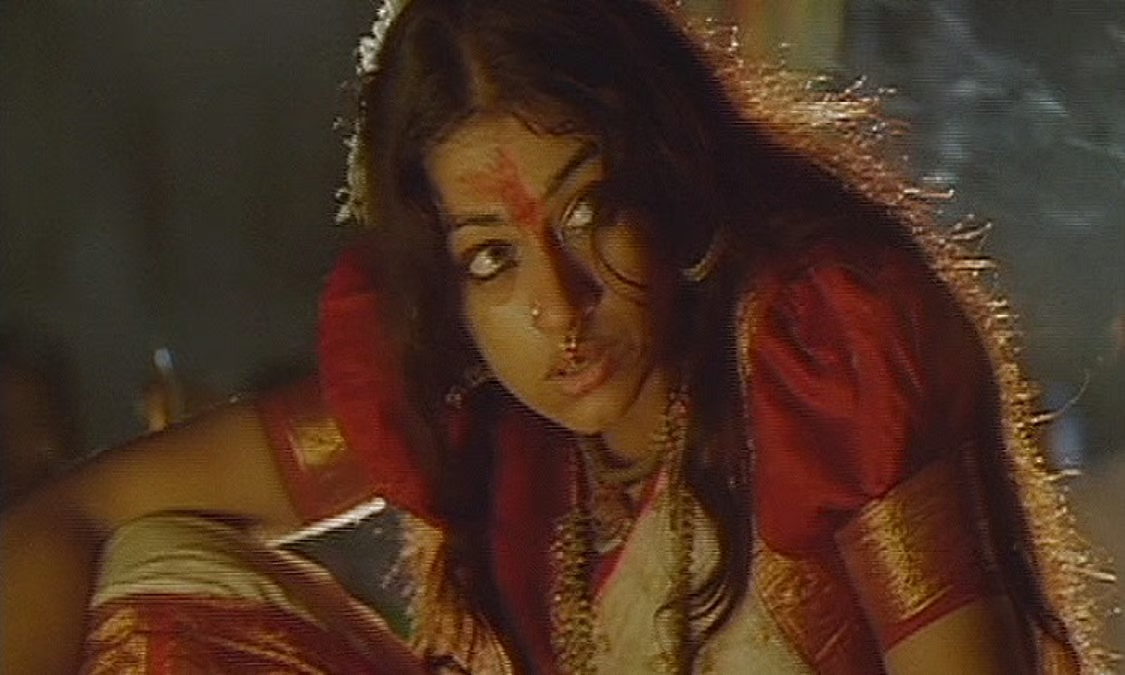
In the early 20th-century compendium Aithihyamala, centers on the story of Alli, a devadasi (hereditary temple dancer-courtesan). Her life was constrained by caste, forbidding her from marrying upper-caste men. A Brahmin priest named Nampi lured her into a false marriage, only to betray and murder her. Her subsequent resurrection as a bloodthirsty yakshi was a direct consequence of this act of caste and gender-based oppression. Most of the conventional films have borrowed this idea, with the death of a young woman, usually due to a man’s deception, resulting in her reincarnation as a malevolent spirit.
However, Lokah brings the historical context of caste oppression to the forefront. The ghost, Chandra, is not merely a jilted lover seeking vengeance. Her actions are not driven by a desire for romantic revenge or tied to her sexuality. The injustice she experiences is far more profound and relatable: she loses her family and is ostracized from the society. Her actions are not a reaction to a personal tragedy but are instead a fight for justice and to restore honor to her family and community.
The Urban Ghost

Conventional ghost films in Malayalam cinema usually restrict these spirits to rural, isolated locations. From Kalliyankattu Neeli to movies such as Indriyam and Kadamattathachan, the ghost is depicted haunting forests or palm trees and attacking men who travel through its domain at night. Lokah departs from this stereotype by moving the supernatural entity into a cosmopolitan city. Chandra resides in an urban city and works at a restaurant. The movie even gives a good, rational reason why she is unable to function during the day, basing her supernatural life in a contemporary world.
Breaking the Saree Trope
Until Lokah, the pictorial depiction of ghosts was strictly stereotypical. Movies such as Kalliyankattu Neeli (1979) and Aakasha Ganga (1999) solidified the mythic figure of the vengeful ghost figure dressed in a white saree, long and unkempt hair, and heavy makeup around the eyes, often suspended in mid-air. These movies gave little space for other interpretations.
Chandra, the protagonist in Lokah, breaks these visual stereotypes. She is a typical city girl, wearing torn jeans, bomber jackets, and sneakers. She even dyes her hair and adorns metallic jewelry, a far cry from the stereotypical ghost. Her red and black color scheme of clothes and hair represents her great power and defiance.
From Demonic to Divine

Lokah also subverts the stereotypical connection of ghosts with evil and fear. Rather than pitting Chandra as an evil, supernatural being, the film perceives her as a guardian and a dispenser of justice. She employs her incredible powers, which are derived from her yakshi lineage, not for personal revenge but to fight crime and injustice in the modern city world. Whereas most traditional ghosts murder without discrimination for a past injustice, Chandra kills only those people who commit acts of injustice on other people. She is a “good ghost” who eats blood from a blood bank to survive, never murdering people just to quench her thirst.
A Ghost free from Male Gaze
In most supernatural movies, the activities of the ghost are usually dictated or manipulated by a male figure, either a priest who is exorcising her or a boyfriend who facilitates her in attaining her goals. Lokah overturns this by depicting Chandra as a self-sufficient and strong character who does not look to a man for affirmation, guidance, or rescue. Though male characters in the movie might attempt to “save” or “assist” her, she continually demonstrates her own power and autonomy. Her sense of right and wrong is structured by her own self-awareness and that of her mother, and not on masculine approbation.
Redefining the Soundtrack
In traditional horror movies such as Bhargavi Nilayam and Aakasha Ganga, ghosts tended to be visible in the backdrop of haunting songs that were sad or tragic. The music in Lokah is of a different kind. It is strong and vivid in portraying the great strength of Chandra and is intended to generate an eerie atmosphere. The music shows her as an everlasting power that comes into being when her people invoke her. The makers even coined a special language “Mozhika” through the combination of tribal languages and Malayalam, immersing the audience in a new, unknown world and distancing the film further from conventional cinematic clichés.


