
 Title Image Slot (Insert URL)
The History of X-Men
The X-Men were concocted through a brilliant collaboration between Stan Lee and Jack Kirby. Over the years, the duo had created many fan-favorite characters like the Amazing Spider-Man, the Incredible Hulk, and the Fantastic Four, among many others.
A common link between all these characters is that they got their superhero abilities through freakish accidents, like a radioactive spider bite for Spider-Man and a gamma explosion for the Incredible Hulk.
Running out of ideas to fuel new origin stories for superpowers, one lazy afternoon Stan Lee came up with an idea to subvert this creative block. He thought: what if they were just born with superpowers?
The original name was “The Mutants,” but the Marvel publisher wanted to call them X-Men, with the “X” standing for extra power. The series was not an instant hit.
Unlike Spider-Man, who represented working-class struggles, or Tony Stark, who fought his inner demons and was haunted by his past, a bunch of outcasts (Cyclops, Jean Grey, Wolverine, etc.) living in a wealthy mansion in upstate New York was not relatable for most people.
As a result, the series was eventually shelved in the early 1970s.
 Image Slot 1
The Return
The canceled comic was taken over by Chris Claremont, who, over the course of 16 years, would change the DNA of superhero comics forever. Instead of the traditional weekly monster brawls or thwarting an evil villain’s new schemes, he turned the series into something more akin to a novel than a traditional comic.
The characters were unique and had more dynamic dimensions to them. For instance, Logan, aka Wolverine, was not your average tough guy; he was an ex-Canadian supersoldier suffering from amnesia and plagued by dark dreams. Cyclops, the team leader, was not your average jock.
He couldn’t open his eyes without a special visor because he couldn’t control his powers. Meanwhile, Nightcrawler was a German mutant who resembled a devil but was a pious and devout believer in God.
On top of all this, there were multiple love triangles, the most popular being the one between Logan, Scott Summers (Cyclops), and Jean Grey.
The X-Men featured thought-provoking storylines, enigmatic villains, and, for lack of a better word, romance. In many ways, X-Men became a soap opera for geeks.
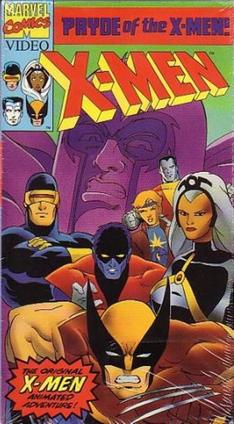 Image Slot 3
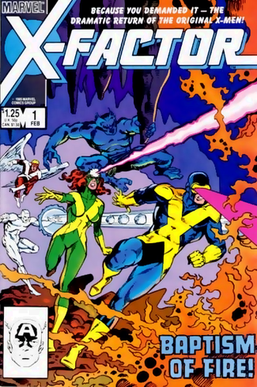 Image Slot 4
 Image Slot 5
The Failed Pilot and the Show That Changed Marvel
In the 1990s, the prevailing notion among major studios was that the only bankable superhero characters were Batman and Superman, and anyone else wouldn’t have wide appeal. Earlier, in 1989, a TV pilot was shot called Pryde of the X-Men. Despite good animation quality, the episode was panned for its portrayal of the titular character Kitty Pryde as a damsel in distress, as well as featuring a Canadian Wolverine with an Australian accent.
But then, Claremont and superstar artist Jim Lee launched a new X-Men #1 comic. Featuring Lee’s iconic tactical redesigns of costumes for characters like Cyclops and Wolverine, the comic sold around 8 million copies—a record that still stands today.
So, in 1992, television executive Margaret Loesch put her career on the line to greenlight an animated series for Fox Kids. She battled executives who thought the show, with its odd-looking characters and dark plots, would be too much for a younger audience.
However, showrunner Eric Lewald mandated that the series be treated as an adult primetime drama, featuring a serialized storyline rather than the usual episodic pace of a kids’ show.
The pilot episode was shipped from South Korea riddled with animation errors, but despite that, its mature storytelling and uniqueness shattered viewing records and paved the way for Marvel’s future success.
 Image Slot 6
 Image Slot 7
The Animated Series and an Everlasting Cultural Impact
Before X-Men: The Animated Series, kids’ shows were largely a ruse to sell action figures; even popular shows like He-Man and Power Rangers followed this same formula. Then came the X-Men. They didn’t deal with the usual one-note supervillain who just wanted to dominate the world or universe.
Here, you had Erik Lehnsherr (Magneto), a Holocaust survivor who wanted to create a world where his mutant brethren could live in peace, even if it meant getting rid of humanity. Then there was En Sabah Nur (Apocalypse)—the original mutant—who wanted to create a world where only the strong thrive, believing that even weak mutants should be purged.
In addition to this, the plot explored mature themes like racism, bigotry, and the AIDS epidemic (through the Legacy Virus storyline). The show taught an entire generation that true heroism is about fighting for a society that may not embrace or accept you because of its inner prejudices.
This immense popularity finally led Fox Studios to greenlight the 2000 X-Men movie. This was the first time a Marvel property made a major foray onto the big screen with a stellar cast that included big names like Hugh Jackman as Wolverine, Patrick Stewart as Professor Charles Xavier, and Sir Ian McKellen as Magneto.
The box office success of the film saved a bankrupt Marvel, which until then had been selling off the film rights to its IPs—like Spider-Man, the Fantastic Four, and Blade—for chump change. In a way, the X-Men paved the way for the current MCU by laying down its initial, rock-hard foundation.
 Image Slot 8
The X-Men Reboot
The X-Men franchise has had many offshoots over the years, but the original animated series remained the best adaptation for many. Loyalist fans often prefer the ’90s animated show over even the live-action movies that minted millions of dollars at the box office.
So, when Marvel planned to revive the show, they did something unconventional: instead of a hard or soft reboot, they decided to go for a direct continuation. Skeptics, critics, and even some fans were initially baffled by the decision.
The creators’ mandate for the new show was strict and simple: maintain the visual language of the ’90s while utilizing modern animation techniques to make the action set pieces more solid and fluid.
To maintain continuity, Marvel successfully brought back the majority of the surviving original voice cast, including Cal Dodd (Wolverine), Lenore Zann (Rogue), and George Buza (Beast), only recasting roles for artists who had passed away.
Much like the ’90s show adapted famous comic storylines like The Dark Phoenix Saga and the Age of Apocalypse, the revival featured major plot points like The Trial of Magneto—where Magneto turns himself over to the UN after becoming the new leader of the X-Men—and events inspired by E Is for Extinction, which featured a devastating Sentinel attack and the tragic death of fan-favorite mutant Gambit.
The season finale leaves the X-Men scattered across the timeline. One faction—Magneto, Xavier, Rogue, and Nightcrawler—is stranded 5,000 years in the past, dealing with a young En Sabah Nur, who will grow up to become the villain Apocalypse. Another faction—Logan, Cyclops, and Jean Grey—is stranded in 3960 AD alongside Cyclops and Jean’s biological son, Nathan Summers, who will grow up to become the time-traveling hero Cable.
Moving forward, the series seems poised to deal with major conflicts like X-Factor vs. X-Force, the arrival of the omega-level threat Onslaught, and perhaps even Nathan fulfilling his destiny of finally ending Apocalypse once and for all.
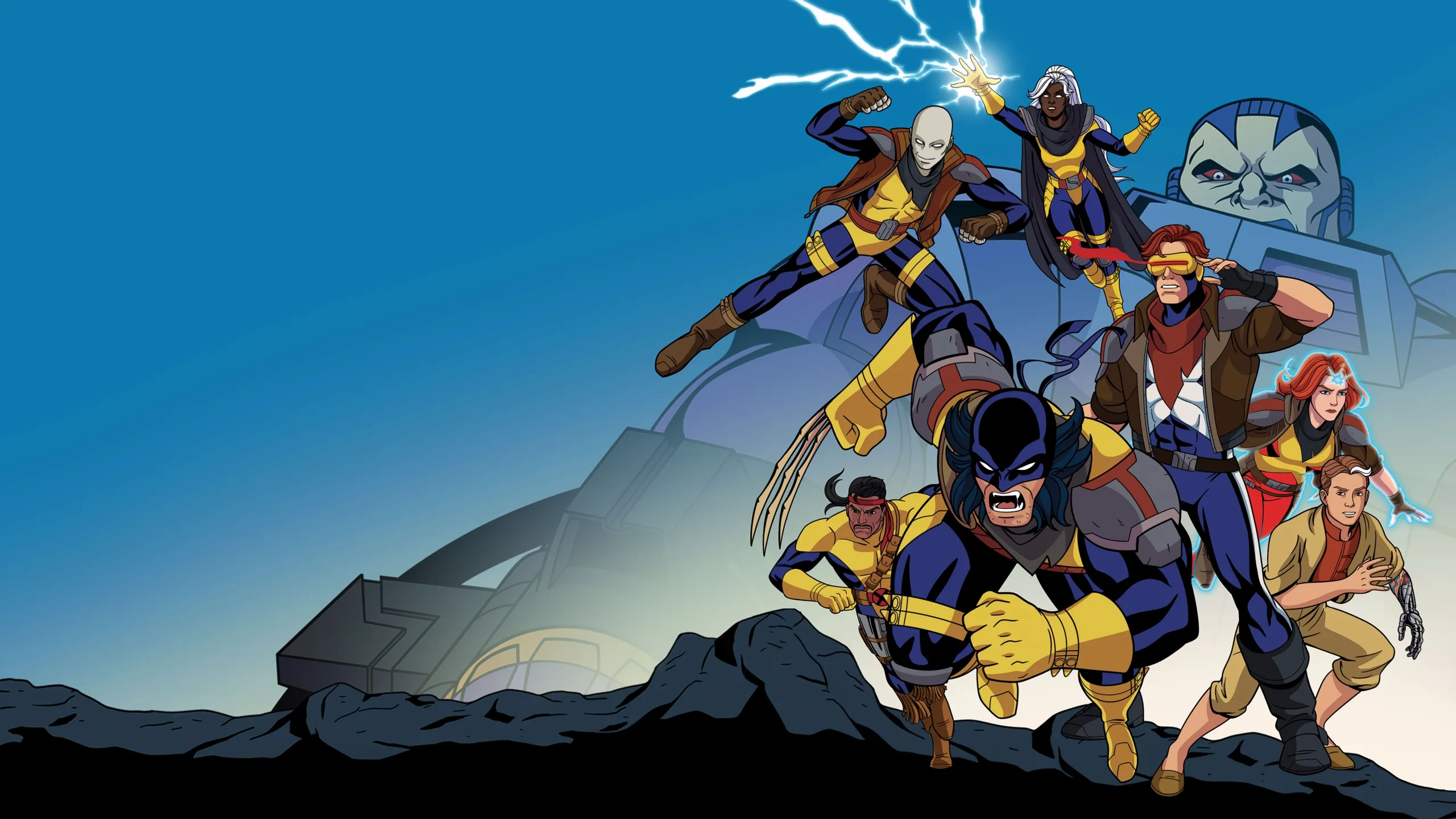 Image Slot 11
 Image Slot 12
Top 10 Most Iconic X-Men Comics
Click on any comic title below to reveal its cover image slot!
Discover more from Ivide LIVE
Subscribe to get the latest posts sent to your email.


